We generally understand how personal injury law works when it comes to private property. If you slip on a wet floor in a grocery store or trip over a broken step at a neighbor’s house, the path to seeking compensation is relatively straightforward. You file a claim against the property owner’s insurance, citing premises liability.
But what happens when the injury occurs on a cracked city sidewalk, inside a public library, or at a municipal park?
When the property owner is the government, the rules change dramatically. While you might assume the government should be held to the same standards as a private business, the legal reality is far more complex. Sovereign immunity laws historically protected government entities from lawsuits, but modern statutes have created specific windows of opportunity for injured citizens.
If you have suffered an injury on public property in Florida, understanding these legal nuances is vital. The Law Office of Amanda E. Wright explores how premises liability applies to government entities, the specific hurdles you must clear to file a lawsuit, and the strict limitations on the compensation you can recover.
Understanding Premises Liability
Before diving into the complexities of suing the government, it is important to understand the core concept of premises liability. This legal theory holds that property owners — whether private or public — have a responsibility to maintain a reasonably safe environment for visitors. To win a premises liability case, you typically need to prove four main elements:
- Duty of Care: The property owner had a legal obligation to ensure the safety of the premises.
- Breach of Duty: The owner failed to meet that obligation (e.g., by ignoring a hazard).
- Causation: That specific failure caused your accident.
- Damages: You suffered actual harm (medical bills, lost wages, pain and suffering) as a result.
When the defendant is a private citizen or company, proving these elements is the primary challenge. When the defendant is the government, simply getting the right to sue is a challenge in itself.
Suing the Government in Florida
The short answer is yes: you can sue the government for a premises liability injury on public property in Florida. However, it is not as simple as filing a standard personal injury lawsuit.
The state of Florida has waived its immunity for certain torts, including negligence, which covers many premises liability claims. This means that if a government employee or agency acts negligently — for example, by failing to repair a known hazard in a government building — they can be held liable just like a private party would be.
However, this waiver comes with significant strings attached. The process is governed by strict procedural rules designed to give the government ample time to investigate claims and limit the amount of taxpayer money paid out in settlements.
Government Immunity and Waivers
The biggest hurdle in these cases is the concept of “sovereign immunity.” This legal doctrine traditionally prevented citizens from suing the state without its consent. The logic was that the government cannot effectively govern if it is constantly defending itself against lawsuits.
In Florida, this immunity is waived under Statute 768.28. This statute essentially says that the state agrees to be sued for injury or loss of property caused by the negligent or wrongful act of any employee acting within the scope of their office or employment.
While this waiver opens the door for lawsuits involving public property, it does not swing the door wide open. The government retains immunity for “discretionary” acts — decisions that involve planning or policy-making. However, “operational” acts — like the maintenance of a building or sidewalk — are generally subject to liability. If the government decides to build a park (discretionary), it cannot be sued for that decision. But if they fail to maintain the playground equipment in that park (operational), they likely can be.
Strict Rules and Notice Requirements
If you determine that you have a valid claim, you cannot simply head to the courthouse. Florida law imposes a strict pre-suit notice requirement that must be followed to the letter.
The Administrative Claim
Before you can file a lawsuit, you must first file a written administrative claim with the specific government agency responsible for the public property where you were injured. You must also provide notice to the Department of Financial Services.
This notice must be filed within three years of the date of the injury. If you miss this deadline, your claim is likely barred forever, regardless of how severe your injuries are.
The Investigation Period
Once the notice is filed, the government agency has a six-month investigation period. During this time, you cannot file a lawsuit unless the agency formally denies your claim. If the six months pass without a response, the claim is considered “constructively denied,” and you may then proceed with a lawsuit.
Damages Caps
Perhaps the most significant difference between suing a private entity and the government is the limit on financial recovery. Florida law caps damages in claims against the government. Currently, the limits are:
- $200,000 per person
- $300,000 per incident (if multiple people were injured)
Furthermore, you cannot seek punitive damages (money intended to punish the defendant) against a government entity.
If your damages exceed these caps, you can accept the capped amount, or you can seek the remainder through a specific legislative process known as a “claims bill.” This involves petitioning the Florida Legislature to pass a specific law authorizing the extra payment, which is a rare and difficult process.
Proving Negligence
Even if you navigate the procedural maze successfully, you still must prove the core of your premises liability case: negligence. Strict liability usually does not apply here; simply getting hurt on public property does not automatically mean the government pays.
To succeed, you must demonstrate that the government entity had “actual” or “constructive” knowledge of the dangerous condition.
- Actual Knowledge: The agency knew the hazard existed (e.g., someone had previously reported the broken step).
- Constructive Knowledge: The hazard existed for such a long time that the agency should have known about it in the exercise of ordinary care.
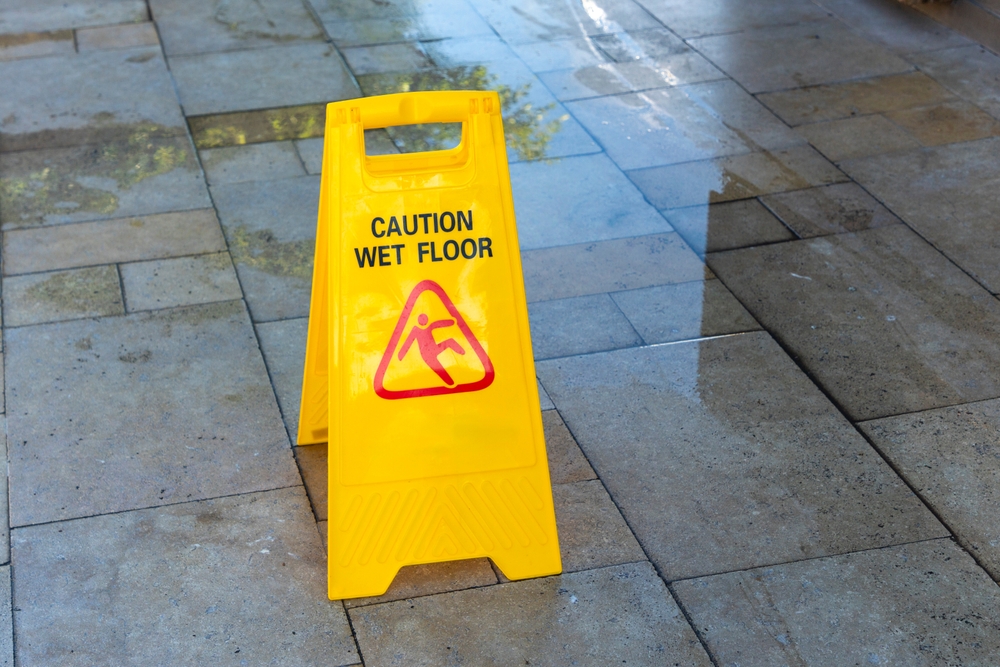
You must also prove that after learning of the hazard, the government failed to fix it or warn the public within a reasonable amount of time. For example, if a pipe bursts in a city hall lobby and you slip five seconds later, the government likely isn’t liable because they had no time to react. If the water sits there for five hours without a “Wet Floor” sign, negligence is much easier to prove.
Seeking Legal Guidance is Essential
Suing the government for premises liability is possible, but it is an uphill battle, rife with procedural landmines. From strict three-year notice deadlines to hard caps on damages, the system is designed to protect public funds.
Because the burden of proof regarding notice and negligence is so high, these cases require a strategic approach. You need to gather evidence not just of your injury, but of the government’s knowledge of the hazard and their failure to act.
If you’ve been injured on another person’s property, knowing what constitutes a valid claim and your available legal options is crucial for protecting your interests and securing the compensation you deserve. The legal team at the Law Office of Amanda E. Wright can help. Contact us today for more information.